
This quick guide explains what Value-Added Benefits (VABs) are, the different types of benefits that are available, and how to find and apply for VABs.
Author: Lindsay Kenton
ePASS Can Help Lower Your Family’s Costs
This quick guide explains ePass, a program that can help lower a family’s household costs. It includes how to sign up, where to get help applying, and what is needed to apply.

Talkspace for Youth Mental Health Integrated Care Rounds (November 2025)
Description
NC InCK's November 2025 Integrated Care Rounds introduces Talkspace as a secure, accessible online therapy platform for North Carolina youth ages 13–17, offering virtual therapy, peer support communities, and self-guided mental health courses without requiring parental consent or insurance. The discussion highlights the urgent need for youth mental health support, describes Talkspace’s privacy protections and suicide risk algorithm, and shares upcoming community events and resources for promoting mental wellness.
Click this link for the November 2025 Integrated Care Rounds Slide Deck
Key Takeaways
- NC Dept. of Health and Human Services is collaborating with Talkspace to offer free virtual behavioral health services for NC-based youth ages 13-17 who have been affected by the legal/justice system (including directly justice-involved youth, youth who have been victims of crime, and youth affected indirectly by the justice system, e.g. teens who have family members who are/have been incarcerated or detained by immigration enforcement).
- The program is available for free regardless of insurance and citizenship status. Caregiver/guardian consent is not required for youth to enroll.
- Available services include messaging and live sessions with licensed providers, moderated online peer support communities, and a two-week self-guided mental health course designed for teens.
Resources
- Talkspace Program for NC Youth: Form to learn more about and enroll in free Talkspace services. Page is English-only, although Spanish-speaking therapists are available; care managers may need to assist patients speaking languages other than English with completing the request form.
- Talkspace Resources: Printable and digital materials to share program information with interested teens.
ECHO Series: Adolescent Behavioral Health Integrated Care Rounds (September 2025)
Description
NC InCK's September 2025 Integrated Care Rounds discuss a case study in adolescent behavioral health and resources that can support families and children to proactively mitigate potential harm.
Click this link for the September 2025 Integrated Care Rounds Slide Deck
Key Takeaways
- Depression commonly begins in adolescence. Between 2009 and 2019, the prevalence of adolescent depression nearly doubled.
- Suicide is the second-leading cause of death for people ages 10-34. 90% of individuals who attempt suicide have an underlying psychiatric condition, and depression is the most common one.
- Know the difference between active and passive suicidal statements. Active statements indicate intent or a plan (“I want to die”), while passive ones indicate hopelessness (“I wish I weren’t here”). Both matter and should always prompt further evaluation.
- Referrals to behavioral health services often take time. During this waiting period, care managers can support families by monitoring the referral, helping them find ways to manage stress, and encouraging healthy behaviors like staying active and connected.
Resources
- North Carolina Psychiatry Access Line (NC-PAL) - Provider-facing resource to connect providers with pediatric psychiatrists and social workers who can help identify mental health resources. This site also includes tips for how families can talk to their primary care provider about mental health.
- 988 Lifeline - 24/7, free, confidential mental health hotline that connects individuals in need of support with counselors across the United States and its territories. People do not have to be suicidal to call or text 988. Reasons to call include: substance use disorder, economic worries, relationships, culture and identity, illness, intimate partner violence, depression, mental and physical illness, and loneliness. Services are available in Spanish and for those who are deaf/hard of hearing.
- NAMI NC - Operates a free helpline to individuals seeking mental health support. This site also has a guide to navigating a mental health crisis.
- The Adolescent Health Resource Center - Information on mental health and care access for teens, caregivers, primary care providers, and youth-serving professionals.
NC InCK’s Summer 2025 Interns
Throughout Summer 2025, the NC InCK team had the opportunity to collaborate with a group of phenomenal interns. Some of this past semester’s work included research to inform future local policy, an in-depth exploration of the Integration Consultant role, and reflections on system-level drivers of health inequities. Each intern brought a unique lens to NC InCK’s mission of building systems that support child and family health. Read on to learn more about their work, insights, and experiences. The NC InCK team is grateful for all of their work and the experiences we had along the way!

Claire Sibold is a fourth-year medical student at Duke applying to family medicine. She was drawn to NC InCK’s mission to build systems that holistically support children and their families and particularly valued the opportunity to conduct research evaluations that could influence local policy. At NC InCK, Claire interviewed care managers, integration consultants, social workers, and caregivers in the foster care system to understand their experiences with NC InCK care management. She appreciated having the opportunity to listen to these partners and let their experiences guide our understanding of the care management model’s impact. Claire’s favorite part of working with NC InCK is the team’s shared commitment to improving child health and well-being. Each member brings unique skills and experiences, which makes for a great learning environment! In her free time, Claire enjoys spending time with family and friends—preferably outdoors!

Eujin Chung, a sophomore at Duke, was drawn to NC InCK's mission of the reimagination of our healthcare system to prioritize child and family health. In particular, she is inspired by the way NC InCK roots its work in the community to be child- and family-led. Eujin found working on a project about the Integration Consultant role especially meaningful. “I learned what holistic care really means and how important it is to connect systems for children’s health,” she says. Her experience gave her valuable insight into care management and value-based healthcare—knowledge she hopes to use as a future physician.

Meera Nagara is a fourth-year medical student at UNC applying to pediatrics. Before medical school, she worked at a Federally Qualified Health Center in Wilmington, NC during the COVID-19 pandemic. There, she witnessed how her medical director collaborated with the community to improve early vaccine access. This experience revealed how system-level flaws—not just individual barriers—drive health inequities. Meera’s favorite part of working with NC InCK is the team's shared mission to improve health systems for children and families. She values the opportunity to grow alongside thoughtful and passionate colleagues who are committed to both innovation and equity. In her free time, Meera enjoys spending time with friends and is a former competitive jump roper!

Angiolina Llibre is studying pre-med and psychology at UNC. She’s a passionate advocate for Latino health equity and a valued contributor to NC InCK research. Her journey began through her work as a medical interpreter, where she met Dr. Rushina Cholera and discovered the power of using her bilingual skills to connect families, culture, and healthcare. Inspired by this experience, Angiolina joined NC InCK to continue championing health equity for Spanish-speaking communities. She’s found deep fulfillment in collaborating with a team that values diverse perspectives and thoughtful feedback. One of her biggest takeaways has been the importance of listening and incorporating input to strengthen her work. Outside of research, her favorite place is the Dominican Republic, where she enjoys swimming, snorkeling, and learning about coral reefs.

Daud Malik is a second-year medical student at Duke with a deep interest in therapeutics. His work with NC InCK began through conversations with mentors at Margolis, who described it as a place where bold ideas are transformed into real systems of care. That promise of mentorship and impact drew him in—and delivered. One of Daud’s most meaningful projects involved analyzing 1115 Medicaid re-entry waivers to understand how states deliver care to justice-involved youth, building on his prior work registering halfway house residents for cancer screenings and primary care. At NC InCK, Daud has come to appreciate the power of humility in leadership, watching experts with decades of expertise in Medicaid, child health, and community care model openness and collaboration. As he pursues a future as a clinician-policymaker, he’s inspired by how frontline experiences with families can shape system-level change in community health.
Tami Hilton Retires After Decades of Service to North Carolina’s Children and Families
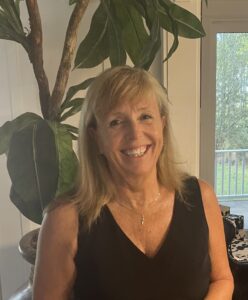
After more than four decades of nursing and public health service, Tami Hilton—an Integration Consultant with North Carolina’s Integrated Care for Kids (NC InCK)—has retired. She is leaving behind a legacy of compassion, innovation, and unwavering dedication to children and families across the state.
Hilton began her career in 1982 as a nurse, serving in health departments, emergency rooms, and home care for children with complex medical needs. Her journey through public health eventually led her to Medicaid-managed care with United Healthcare and, most recently, to NC InCK, where she found a community of professionals equally committed to improving the lives of children.
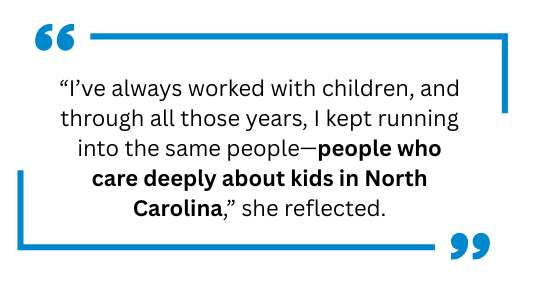
At NC InCK, Hilton’s role was multifaceted. She mentored Family Navigators—nurses or social workers new to case management—helping them grow into confident advocates for children and families. “It’s so fun to watch someone blossom and be empowered to walk beside the families they’re serving,” she said. “They realize there’s no limit to how they can help lift the burden for families—whether it’s connecting a family to Make-A-Wish or helping a mom get a break.”
Creating Practical Resources for Family Navigators
A big part of Hilton’s recent work with NC InCK has involved creating practical resources for case managers that address everyday challenges such as sleep disruptions and sunscreen safety. “These aren’t things Medicaid usually pays for, but they’re things I care about—and they matter.”
Understanding how sleep disruptions uniquely affect families, Hilton developed a training initiative to equip Family Navigators with strategies for improving sleep routines. Whether helping a toddler sleep independently or supporting a newborn’s nighttime schedule, her work offered real relief to families. Colleagues often turned to Hilton for guidance on complex cases, including children in foster care who had experienced trauma and struggled with sleep. Though she didn’t consider herself an expert, Hilton embraced these opportunities to collaborate and offer compassionate, informed support.
Hilton has also championed awareness around sunscreen safety, especially for children. She raised concerns about common sunscreens containing hormone-disrupting ingredients and advocated for mineral-based options, particularly those with zinc. “I thought a lot of my sunscreens were good,” she explained, “but when I checked them on this great website that analyzes ingredients, I found some weren’t. It shows you which ones might cause skin allergies or contain hormone blockers.”
“You Can Become the Expert”
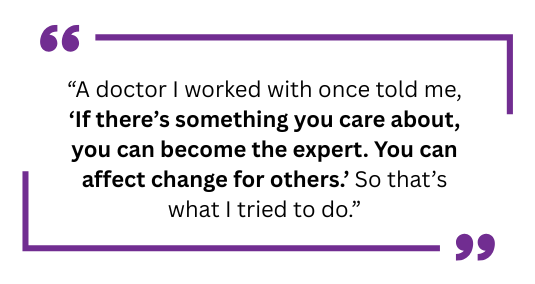
A pivotal moment in Hilton’s career came early on, when a child died from an asthma attack. “It changed me,” she said. “From that point on, I learned everything I could about asthma.” She was even named the North Carolina Asthma Champion in 2013 (a distinction from the Asthma Alliance of North Carolina) and the Smart Start of New Hanover County’s 2019 Children’s Champion. “It wasn’t about doing something new—it was about making sure people knew what was already out there.” Her story is a testament to the power of persistence, advocacy, empathy, and the belief that small changes can lead to lasting impact.
Hilton also emphasized the importance of NC InCK’s long-term case management model, especially for high-risk families. “A grandmother with mobility issues raising her grandkids needs consistent support—not just when the family is in crisis.” She praised the program’s success in partnering with child welfare agencies, easing the burden on social workers and improving outcomes for placement providers and guardians.
As NC InCK and the broader healthcare community bid farewell to Hilton’s daily presence, her influence will continue to ripple through the families she’s supported, the colleagues she’s mentored, and the systems she’s helped shape. In retirement, Hilton looks forward to focusing on movement and wellness—water aerobics, Pilates, and yes, pickleball. “That’s a requirement when you’re retired, I think,” she joked. “I’ve worked from home for decades, so I’m ready to move more and live healthier.”

Legal Aid Integrated Care Rounds (July 2025)
Description
NC InCK’s July 2025 Integrated Care Rounds discuss how legal remedies can support families facing housing instability, benefit denials, and discrimination. This session shares practical resources and insights on how to connect families to Legal Aid of North Carolina’s services.
Video
Click this link for the July 2025 Legal Aid Integrated Care Rounds slide deck.
Key Takeaways
- Accessing Legal Aid Is free, confidential, and accessible – Clients can apply via the helpline, online, or be referred by health and community partners. Legal Aid provides multi-language support and an online self-help library for clients who prefer to or need to self-navigate.
- Legal Aid offers broad legal support for low-income individuals – Services span public benefits (e.g., Medicaid, SSI, FNS), housing, employment, education, and domestic violence. Legal Aid of North Carolina serves all 100 counties in North Carolina and served more than 69,000 North Carolinians in 2024.
- Legal Aid of NC is a critical partner in addressing Social Drivers of Health (SDOH) – Up to 80% of health outcomes are influenced by social and economic conditions. Legal Aid helps individuals address civil legal problems (like housing, benefits, and discrimination) that directly impact health outcomes. Their services can be a powerful intervention when integrated into health care settings.
Resources
- Legal Aid of NC Website – Comprehensive hub for legal resources, self-help tools, and application access
- Self-Help Library – Free digital resource with guides, forms, and videos on legal issues like housing, benefits, and family law
- Statewide Helpline – Individuals can apply for legal assistance by phone. Particularly helpful for those without internet access or who need direct conversation
- NC Medicaid Ombudsman – Independent resource for Medicaid beneficiaries who need help resolving coverage or care disputes