November 2024 NC InCKlings Newsletter

In the November 2024 edition of the NC InCKlings newsletter, you'll find updates, insights, and opportunities to engage with NC InCK. Topics include:

  • Opportunities to Engage with NC InCK
  • NC InCK Care Model Updates
  • Family Navigator Capacity Building
  • Staying Connected

To receive future updates, you can email info@ncinck.org to join our mailing list.

The November 2024 NC InCKlings is available at this link.

Screenshot 2024-11-05 at 9.40.50 AM

NC InCK Youth Council Voices: Layla B.

Meet Layla, a high school junior who is a passionate student and a committed NC InCK Youth Council member. At school, she is actively involved in the Art Club, Student Government, and Debate Club. Additionally, she is a dedicated member of the National FFA Organization, National Honor Society, and Girl Scouts, where she engages in numerous community projects. With three years of experience on the NC InCK Youth Council, Layla joined to connect with like-minded peers who share her dedication to positive change. Most of all, she believes in amplifying the often-overlooked voices of adolescents and young adults. Hear more from Layla below.

Responses have been edited for clarity and readability.

Layla B., NC InCK Youth Council member

How has the Youth Council encouraged you to collaborate with other young people to better understand their experiences?

Layla: Being a NC InCK Youth Council member encouraged me to come out of my shell and start conversations with new people. During meetings, I feel comfortable exchanging ideas with other like-minded students and hearing about their own experiences and opinions.

How have monthly Youth Council meetings impacted your understanding of child and family-led community programs and partners?

Layla: Through Youth Council meetings, I have become more informed about things like community programs that I would not have learned otherwise. Increased awareness about these resources has allowed me to fully appreciate their impact.

How does the Youth Council help NC InCK incorporate the adolescent and youth-adult experience into their decision making?

Layla: The Youth Council does everything in its power to include the voices of the adolescents and youth who will be engaged in the NC InCK model. It is important that we include the opinions and experiences of those who are actually dealing with the problems we hope to solve. Without this perspective, it is impossible to know what will truly help these individuals. Everyone’s voice needs to be heard.

Looking Back and Moving Forward: Judy Lawrence, Integration Consultant, Reflects on NC InCK and Juvenile Justice-Involved Youth Initiatives

I have served as an Integration Consultant for NC InCK, based out of the NC Division of Juvenile Justice and Delinquency Prevention (DJJDP), since November 1, 2021. As I prepare to move on from this work, I have been reflecting on the impact NC InCK has made on juvenile justice-involved youth, families, and communities.  

One goal of all InCK programs is to holistically assess and address ways to prevent out-of-home placements of youth.  This certainly applies to youth involved with the Juvenile Justice system and why it is a focus for NC InCK.   

Through policy studies, workgroup efforts, and intern research, our NC InCK team has found multiple areas of potential influence for these vulnerable youth. 

1. Medicaid Suspension and Reinstatement

When a youth is committed to a Youth Development Center (YDC), their Medicaid is suspended until no more than 24 hours pre-release. However, the current process for reinstatement after release is completely manual which often leads to a gap in Medicaid coverage. In collaboration with our NC Medicaid team, we concluded an automatic reinstatement process would help solve this problem. Through further research, we learned of the opportunity to change the pre-release timeframe for reinstatement of coverage. Our workgroup developed talking points, shared resources, and educated DJJDP and Medicaid staff on how the current policy has had a negative impact on youth in need of pre-release services, specifically for mental and/or behavioral health.  

2. Resources for Adolescents and Young Adults, Focusing on Juvenile Justice Involvement

Not all care managers are trained to work with adolescents and young adults or aware of the complex needs of this population. To support care managers, we created an extensive, though not exhaustive, guide of resources and supports for adolescents and young adults involved with the Juvenile Justice system and the NC InCK care model. This guide includes information about physical, behavioral, mental, and sexual health as well as education, employment, finances, housing, nutrition, and support. It also shares ideas and tips for care managers to discuss goals and the transition from adolescence to adulthood with the youth and/or family. 

3. Juvenile Court Counselor (JCC) Community Referrals

When Medicaid launched Tailored Care Management (TCM) in December 2022, the landscape of Juvenile Justice and Medicaid changed significantly. Most juvenile justice involved youth transitioned to TCM, making them ineligible for NC InCK care management. However, NC InCK saw an opportunity to engage more youth in the model earlier and began training Juvenile Court Counselors (JCCs) on how to make direct referrals for NC InCK care management. These training sessions began in May 2023 and have resulted in nearly 40 referrals so far. Though some of those referred were TCM-eligible, several decided to receive support from NC InCK Family Navigators. Juvenile Court Counselors have expressed their support and positive experience with the direct referral process. 

4. Connecting with Juvenile Justice Behavioral Health (JJBH) Partnerships

Each NC InCK county has an established Juvenile Justice Behavioral Health (JJBH) partnership intended to address mental health and substance use needs of youth and families involved with DJJDP. We connected with the Alliance JJBH team on July 17, 2023, and continue to participate in meetings regularly. Through this, we created a process for JJBH partners to refer youth to NC InCK care management leveraging the existing referral path for JCCs. We hope to continue to expand these efforts through additional partnerships in the coming months. 

Moving Forward: Hope for Improved Medicaid Coverage and Services  

I am confident that NC InCK and DJJDP will continue to build on these achievements, furthering their commitment to provide appropriate services for supporting Juvenile Justice-involved youth. It is my hope that Medicaid will make federal policy changes to allow all vulnerable youth uninterrupted access to Medicaid services while in YDC commitment. It is my dream that, by providing holistic, equal, comprehensive Medicaid services to youth, North Carolina will see a reduction in juvenile crime and delinquency, youth with intellectual or developmental disabilities (I/DD) and behavioral health needs will not be subjected to the juvenile justice system, and families will prosper as they receive the care and services they need to thrive. 

I am deeply grateful for the opportunity to work with NC InCK and DJJDP and will carry my experience in my heart always. May we all keep up the InCKredible work! 

Author:

website headshots_our team (3)

Judy Lawrence: has been innovative and inspiring in her role with DJJDP and NC InCK since November 2021. Her work with Chief Court Counselors and staff has ensured that the needs of youth are addressed by collaborative communications across child and family-serving agencies. Ms. Lawrence’s leadership within the NC InCK structure, and her leadership to connect and strengthen a collaboration between DJJDP and NC Division of Health Benefits to respond to the CMS Section 1115 Waiver which, among other benefits, will enable Medicaid funds to be utilized by youth during the end of their stay in YDCs. 

Ms. Lawrence has worked with the State of North Carolina since February 2007, holding leadership roles with NC DHHS, the Administrative Office of the Courts, and DJJDP.  She has led several projects for TANF and SNAP programs, administered a District Guardian ad Litem program, and managed the national Work Support Strategies and SNAP Collaborative initiatives. She has most recently transitioned to the position of Medicaid Senior Program Manager for NC Advanced Medical Home. Prior to her work with North Carolina government systems, Ms. Lawrence was a Social Work Supervisor with the Alamance County Department of Social Services in North Carolina, and worked with social services agencies in West Virginia, Florida, and Ohio.   

Ms. Lawrence earned her Bachelor of Science degree in Family Studies and Human Services from Ohio University in 1998 and achieved her Lean Process Improvement certification from NC State University in 2017. In her non-work life, she enjoys reading, swimming, baking, and spending time with her handsome hubby and kittos.  

Promoting Kindergarten Readiness in Pediatric Primary Care Practices Using a Multi-Center, Longitudinal, Learning Collaborative Model

Only half of children are fully ready for kindergarten, and only 42% of 3- and 4-year-olds are enrolled in preschool in North Carolina. However, early childhood well visits can support optimal health and well-being and connect children to the community services they need to become kindergarten-ready.

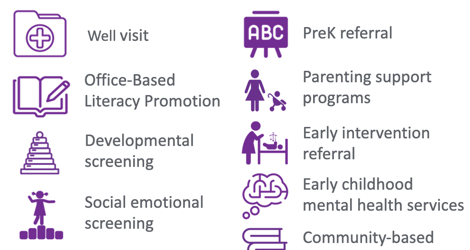
In 2023, North Carolina Integrated Care for Kids (NC InCK) launched the Kindergarten Readiness Promotion Bundle (KRPB), a novel quality metric of their Alternative Payment Model (APM). The NC InCK APM includes financial incentives for providing and reporting on clinical services and community referral activities that support kindergarten readiness. The measure components include developmental screening, social-emotional screening, fluoride varnish application, and literacy promotion.

krpb

To educate practices and improve the delivery of the KRPB components, NC InCK launched a 9-month Kindergarten Readiness Learning Collaborative (July 2023 – March 2024) consisting of quality improvement (QI) support, data feedback, and monthly topic-focused webinars across three clinically integrated networks (CIN) in North Carolina.


The Learning Collaborative aimed to increase the percentage of children (from birth to age 6) receiving the KRPB during well visits from 0% to 60%. Collaborative leaders shared best practices along with relevant QI tools to help practices test and assess the impact of process changes. In turn, practices completed baseline and end line surveys and submitted monthly data on how they were using the KRPB code and its components. Providers earned American Board of Pediatrics (ABP) Maintenance of Certification (MOC) Part 4 credit and AMA PRA Category 1™ Performance Improvement Continuing Medical Education (PI CME) credits for participating in three or more Learning Collaborative webinars.


Each Learning Collaborative session focused on a different component of the KRPB:

July: Kickoff and Overview of Kindergarten Readiness Promotion Bundle

August: Connecting to Pre-K

September: Literacy Promotion

October: Parenting Program Referrals and Social/Emotional/Behavioral Screening and Follow-Up

November: Integrating Multiple Screenings to Address Early Childhood Mental Health

December: Sustaining Change and Exploring New Partnerships

January: Supporting Oral Health


Overall, 15 practices from across three health systems participated in the Learning Collaborative. Practices used various strategies, including building partnerships with community-based resources and standardizing clinic workflows for referrals to improve their KRPB participation. Future work is still needed to study the sustainability of these efforts and determine the impact of primary care-based kindergarten readiness efforts.

Author:

website headshots_our team (6)

Sara Bryk, MPH: graduated in 2024 from the University of North Carolina (UNC) at Chapel Hill with a Master of Public Health degree and a concentration in Maternal, Child, and Family Health. She also received a Certificate in Improvement and Implementation Science and was awarded the Foreign Language and Area Studies Fellowship for Portuguese and Latin American studies. While at UNC, Bryk served as a graduate research assistant at the World Health Organization Collaborating Center for Research Evidence for Sexual and Reproductive Health, and as a project manager on the Kindergarten Readiness Learning Collaborative at NC InCK. Prior to graduate school, Bryk spent three years as a research analyst at Mathematica, where she provided mixed-methods research and project management support for quasi-experimental evaluations of international development projects. She also spent a year as a Fulbright Teaching Fellow in Colombia and holds a B.A. in human biology and sociology from Scripps College.

NC InCK Team Collaborates with North Carolina Area Health Education Centers (NC AHEC) on Statewide Community Health Worker Training Module

Throughout 2023, members of the NC InCK Team collaborated with the Mountain Area Health Education Center (MAHEC) to create a training module that educates on supporting children’s unique needs in a family-centered way. NC InCK’s participation in this NC AHEC training series (which is available for free statewide) was an exciting opportunity to share our expertise on child and family health beyond NC InCK’s five Medicaid counties (Alamance, Durham, Granville, Orange, and Vance).

Registration Page for NC InCK’s Newly Released NC AHEC CHW Specialty Training Program Module.

Beyond introducing the audience to NC InCK, the training focused on two areas that are both challenging to navigate and fundamental to pediatric health: food security and early childhood development and education. The training is intended to educate community health workers and other family-serving professionals across North Carolina about:

  • The importance of food security to children’s long-term health and well-being
  • Critical resources that promote food security and ensure access to early intervention services and high-quality early childhood education programs
  • The importance of high-quality, developmentally appropriate early childhood education to children’s long-term health and well-being
  • Best practices in helping families navigate application and enrollment processes for federal nutrition programs, early intervention screening programs, and childcare/early childhood education services

If you are interested in learning more or taking the training for yourself find the course catalogue here or register at this link.

Authors:

Eleanor Wertman, MPH: Eleanor is the Care Integration Director for North Carolina Integrated Care for Kids (NC InCK). She holds an MPH from UNC Gillings School of Public Health and has a background in healthcare quality improvement and value-based care. Before joining the InCK team, Eleanor worked for UNC Population Health, where she developed programs to address UNC patients’ nonclinical barriers to health and implement systemwide social drivers of health screening. She now leads the implementation of the NC InCK care management model and the NC InCK alternative payment model.

Josie Hatley, MPH: Josie is the Associate Director for Strategy and Operations for NC InCK. Josie holds an MPH in Maternal, Child, and Family Health, along with a Certificate in Innovation for the Public Good from UNC Gillings School of Global Public Health. Josie works to understand the systems that impact children during early childhood within the context of the families, caregivers, and communities around them.

NC InCK Community Referral Pathway at the Academic Pediatric Association Region IV Conference 2024

NC InCK Intern Pearl Teiko presented the initial results of our community referral pathway at the Academic Pediatric Association Region IV Conference on February 24th, 2024. Pearl represented the hard work of herself and other members of the NC InCK team while introducing the community referral model to pediatric clinicians and researchers.

Pearl Teiko standing in front of the poster “Development of community referral systems from cross-sector community settings to promote early identification of children eligible for intensive care management in the North Carolina Integrated Care for Kids (NC InCK) model.”

NC InCK supports the holistic health needs of Medicaid-eligible youth by facilitating the connection between families and care management services. Using administrative data from NC Medicaid, NC Department of Public Instruction, and NC’s Division of Juvenile Justice and Delinquency Prevention (DJJDP), NC InCK prioritizes children for care management services. However, that process has resulted in low engagement rates among eligible children and failed to identify all eligible children. The initial low engagement rates of the model are speculated to be caused by families’ lack of familiarity with NC InCK and the utilization of administrative data, with varying degrees of updates, which failed to identify eligible children promptly.

To improve data identification processes, increase engagement, and build trust in care management services, NC InCK implemented a community referral pathway to increase engagement and trust in care management services among NC InCK-eligible children. Last year, NC InCK began partnering with DJJDP and Alamance Burlington School System (ABSS) in NC InCK’s five counties -- Alamance, Durham, Granville, Orange, and Vance. Juvenile court counselors (JCCs) and school nurses may now complete a confidential survey that initiates a warm handoff of eligible children to NC InCK care managers (Family Navigators).

The NC InCK team worked with community partners to develop and implement the referral pathway. After development, the NC InCK research team gathered input from community partners on their experiences supporting NC InCK-eligible children. It worked to incorporate and tailor the proposed pathway for alignment. NC InCK then provided training to community partners on the new referral processes. Now, NC InCK regularly meets with partners in DJJDP and ABSS to track the program's efficacy and ensure we are meeting the needs and expectations of our partners.

The NC InCK team observed significant improvements in care management engagement rates and the identification of NC InCK-eligible children two months after the community referral pathway began. Families are hypothesized to have increased trust and rapport with their referrers, increasing their chances of engaging with NC InCK. Additionally, referrers have a working knowledge of the social needs of potential NC InCK-eligible children, which allows them to pinpoint children who would benefit from care management services. Community partners also expressed confidence in sustaining the referral process as a permanent facet of their workflows.

Author:

Pearl Teiko: Pearl is a first-year Master of Public Policy Student at Duke University, appreciated the opportunity to showcase her poster on the lessons learned from NC InCK’s community referral pathway. She aspires to advocate for health equity for underserved communities in her career as a policy practitioner.

Poster Author Credits:

Pearl Teiko1, Jeylan Close1,2, Ashley Saunders2, Nancy Madenyika2, Josie Hatley2, Eleanor Wertman2, Alex Gertner3, Alyzia McAlmon2, Judy Lawrence2 Rushina Cholera1,2

1Duke University, 2North Carolina Integrated Care for Kids, 3UNC Hospitals 

May 2024 NC InCKlings Newsletter

In the May 2024 edition of the NC InCKlings newsletter, you'll find updates, insights, and opportunities to engage with NC InCK. Topics include:

  • Opportunities to Engage with NC InCK
  • NC InCK Care Model Successes
  • Family Navigator Capacity Building
  • Alternative Payment Model Updates
  • Check-In With the NC InCK Team
  • NC InCK Council Updates
  • Staying Connected

To receive future updates, you can email info@ncinck.org to join our mailing list.

The May 2024 NC InCKlings is available at this link.

Supporting Families’ Access to SNAP Benefits: NC InCK and Partner’s Response to Food Insecurity

In March 2023, members of the NC Integrated Care for Kids (NC InCK) model joined a collaborative North Carolina team led by the NC Division of Child and Family Well-Being and Meals4Families, which included partners from the community, education, health care, and state agencies. This group was awarded $750,000 from Share Our Strength’s No Kid Hungry campaign and support from the American Public Human Service Association (APHSA) as part of a two-year initiative aimed at increasing enrollment in SNAP (NC’s Food and Nutrition Services program) by creating better pathways to support families’ access to benefits.

SNAP in Schools 

SNAP is underutilized in North Carolina. In 2019, only 69% of individuals who were eligible for SNAP food benefits were enrolled in the program. In their 2021-2023 Strategic Plan, the North Carolina Department of Health and Human Services (NC DHHS) set a goal of 90% participation in SNAP for eligible children and families. Students and their families are among those eligible for but not receiving SNAP benefits. Children spend more time at school than anywhere else outside of their home. Often teachers, counselors, student support staff, and school nurses know when families are struggling to afford groceries.

Working with school districts, community-based organizations, and Department of Social Services (DSS) offices, NC InCK team members and partners are developing a pathway for school advocates to help families learn about and enroll in SNAP food benefits. The approach follows the SNAP in Schools model developed by Share Our Strength’s No Kid Hungry campaign.

Increased access to the SNAP program can bring benefits to the entire school community. If more than 40% of students receive qualifying public benefits, individual schools or school districts can provide free school meals for all students through the Community Eligibility Provision (CEP).

Teresa, a parent of two NC InCK members, shares the powerful impact that pandemic-era universal school meals had for her family and her children’s classmates:

“Food insecurity is urgent in every school. Many children receive meals only at school and no meal at home for dinner. My children attend a Title I school, and the need is urgent here. Free meals for my children are a blessing to my family. It helps tremendously with our family budget to stay afloat financially. We're a normal family, but the increase in the cost of food can make buying lunch meals a hardship for our family and many others. 

Mid-pandemic universal free meals were given to all children in our school, and, when the government announced that the ‘Pandemic was over,’ universal free meals were taken away. Immediately, I received calls from fellow parents asking why were the free meals taken away and explaining the sudden financial hit to their family.

It's more than just food. Food security is not worrying about your children being fed two meals out of the day. Food security brings relief and helps remove the stress and pressure of feeding your child and keeping them alive. Children are an investment. Everything we deposit in them is never wasted. Universal free meals will secure their future. They are the next generation that replaces us. Feeding every child is worth the cost because every child is priceless and they are our GREATEST investment.”

Teresa Spruell, NC InCK Family Council Member; Parent Teacher Organization President, Butner-Stem Elementary School, Granville, NC 

Health-Community-Based Organizations (CBO) Partnerships:

NC InCK and partners are also positioned to provide an effective pathway for health care providers to help families enroll in SNAP. Health systems in NC are required to screen children and families insured by Medicaid for challenges with food security. However, health systems and their providers often do not have the resources to support families through the intensive process of applying for key economic support programs like SNAP.

Working with NC Medicaid, Carolina Complete Health, and Duke Health, NC InCK is working to lower the number of Medicaid-insured individuals living in the five NC InCK counties who are eligible for but missing out on SNAP benefits. In partnership with SNAP enrollment specialists at the More in My Basket program, NC InCK team members are helping to develop effective referral systems that Duke Health clinics and care managers can use to connect eligible patients with enrollment support for SNAP food benefits.

Dr. Carolyn Avery, Duke Physician and Associate Professor of Medicine and Pediatrics, shared, “As a primary care doctor, I recognize that access to affordable and healthy food has more impact on health than any medicine I might prescribe. Children with food insecurity have higher rates of chronic diseases, more trips to the Emergency Department, poorer academic performance, and worse mental health. Combatting food insecurity in our communities has to be one of our top priorities as pediatricians.”

The collaborative efforts of NC InCK, the NC Division of Child and Family Well-Being, Meals4Families, and their partners, supported by Share Our Strength and the American Public Human Service Association (APHSA), are paving the way for meaningful change in addressing food insecurity and improving access to SNAP benefits in North Carolina. This team’s comprehensive efforts underscore the importance of combating food insecurity and investing in the well-being of children for North Carolina communities and healthcare professionals alike.

 Learn more about NC InCK’s work breaking down barriers and bridging gaps to reduce food insecurity in the first part of this series on food insecurity at this link.

Authors:

Kate Hanson: Kate is Executive Director for Meals4Families (M4F). M4F works to break down barriers that prevent families from accessing food, healthcare, and economic support through public benefit programs. Their work is focused on community health, community wealth, and wealth equity as pathways to ending child hunger in North Carolina.  

Melissa McDonald: Melissa McDonald serves as Deputy Director of Child and Family Services at North Carolina Integrated Care for Kids (NC InCK).  At NC InCK, Melissa works to improve coordination between systems (child welfare, food, housing, legal aid, schools, behavioral health, early childhood) and enhance services for Medicaid-insured children and their families. Before joining NC InCK, Melissa spent ten years working directly with children and families involved in the child welfare system.  

Dan Kimberg: Dan Kimberg serves as the Director of Strategy and Operations, and currently the interim Managing Director, at NC Integrated Care for Kids where he strives to improve health and well-being outcomes for Medicaid-insured children and youth through work across numerous systems (food, housing, behavioral health, schools and early childhood). Prior to joining NC InCK, Dan worked in and around schools for a decade as a part of Student U in Durham, and then supported cities around the country in developing strategies to combat housing instability through racial reconciliation and equity-based policy reform. Dan has a Master’s degree in “Social Justice and Childhood Ethics” from Union Theological Seminary and graduated from Duke with a Bachelor of Arts in a degree he created titled “Advocating for Educational Reform through Policy and Practice.” 

NC InCK Welcomes New Managing Director Chelsea Swanson

NC InCK is excited to welcome Chelsea Swanson as NC InCK’s new Managing Director. Chelsea was involved in the model's initial launch in 2019 and led NC InCK's behavioral health work in conjunction with her role as a Program Director for the North Carolina Psychiatry Access Line (NC-PAL) through the summer of 2021. Most recently, Chelsea served as the Program Manager of Behavioral Health for the Duke Primary Care Network. Chelsea is thrilled to return to the NC InCK team and is excited to identify pathways and partnerships towards sustainable growth of key model components that support whole child health.

Chelsea Swanson, NC InCK’s new Managing Director
Chelsea with her partner, Spencer

Chelsea holds a Masters Degree in Public Health from the Gillings School of Global Public Health at the University of North Carolina at Chapel Hill where she studied how systems and behaviors can drive equitable healthcare access. Throughout her career, Chelsea has worked across a variety of interdisciplinary teams, programs, and projects to support the development, expansion and evaluation of program objectives. These projects included implementing the delivery of behavioral healthcare in the primary care setting, improving network adequacy, developing a stronger workforce, and increasing community stakeholder engagement.  


Chelsea is a Durham native who greatly enjoys trying the newest restaurants, watching Duke basketball, making art of all kinds, and spending time with her family. 


We hope that you will join our team in welcoming Chelsea back to the NC InCK community and share in our excitement for her leadership and vision.

NC InCK Shares Insights in Recent NC Medical Journal Case Study

NC InCK executive team members, Dr. Rushina Cholera, Sarah Allin, Dr. Richard Chung, Dr. Kori Flower, Dan Kimberg, Melissa McDonald, and Dr. Mike Steiner, published a case study sharing early learnings from NC InCK’s approach to whole-child care in the North Carolina Medical Journal.  

This article highlights NC InCK’s integration of physical, mental, behavioral, and social health needs into a care management model that focuses on child and family well-being. The case study describes NC InCK’s efforts to enhance the capacity of health systems and go beyond traditional medical interventions. The authors underscore how NC InCK’s focus on the  ten core child service areas  contributes to accomplishing these goals. 

Additionally, the article emphasizes how NC InCK’s care management model offers long-term support to families while collaborating toward shared goals through the development of personalized Shared Action Plans. To do this, NC InCK trains care managers to focus on family well-being through a holistic look at the systems that impact them (e.g., Behavioral Health, Food, Housing, Early Childhood), and through collaboration with care team members like guidance counselors, school nurses, and teachers who represent those systems. 

Furthermore, the authors stress NC InCK’s collaboration with schools, highlighting the importance of in-school services, information sharing between care managers and school professionals, and the evidence-based actions healthcare practices can take to promote school readiness. NC InCK is also focusing on the care of children in foster care. NC InCK works to pair children in foster care with care managers to increase coordination between their different care providers. The authors of the case study recognize the need for additional foster care resources so that we can fully realize our vision of whole-child health. 

The authors share that, ultimately, NC InCK hopes to provide an example of how care management focused on whole-child health can lead to improved health and well-being outcomes. The model remains dedicated to advancing whole-child health care by addressing the holistic needs of Medicaid-enrolled children in North Carolina. 

Read the full story through this link.