
Hi. I’m Kirsten (she/ella), and I’m the early childhood integration consultant (IC) at NC InCK. I provide trainings, resources, and hands-on support to care managers (CMs), who in turn, pour into the families we serve. CMs facilitate access for families, and our IC team has the unique opportunity to consider how we can build their capacity and knowledge in different child-serving sectors.
About Me
- I was born in Yucatán, Mexico, and raised in Minnesota.
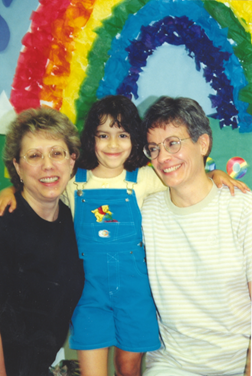
- I’m a Head Start kid and the oldest of four siblings.
- I was the first in my family to go to college, and my siblings followed.
These things have shaped how I walk through this world- they inform my work and fuel my passion to be a catalyst for change. I believe that every child deserves a safe home, nutritious food, and a caregiver who feels empowered, not overwhelmed. I also fundamentally believe in equitable access to healthcare and education. I’m sure most can agree both are important and complex systems, especially when they intersect, and even more so for historically marginalized families.
"Aren’t there programs and services designed to walk alongside families?”
Yes, and yet two of the biggest existing challenges we come across are that:
- Many families (and family advocates) aren’t aware of all the resources available to them.
- Those who are informed often face barrier after barrier—whether it’s fear, waitlists, turnover, funding, transportation, literacy, and more.
We often hear that “investing in a child is investing in the future,” but what does that really mean? What do we invest in, where, when, and for how long? Research says birth to age five are the most critical years in a person’s development. The first five years aren’t a phase—they’re the foundation on which we not only catalyze a successful academic career but also achieve better health outcomes1. However, our state and country are grappling with the effects2 of child-care deserts3, underfunded pre-K programs, and the expiration of federal pandemic-era stabilization funds. And while policymakers continue to debate solutions, children and families are often navigating fragmented systems alone.
I’m not saying I have the answer—but I said what I said. We’ve got work to do.
What I Do and Why It Matters
Building Capacity for Care Managers: ICs organize monthly Integrated Care Rounds (ICRs) with subject-matter experts based on the CMs’ needs. Alongside the ICRs, ICs create resources companions, author in-depth core child service area guides, and one-pagers for best practices on connecting families to specific supports. Part of our “secret sauce” is connecting families to various economic supports—even community events like Roll Up & Enroll or NC MedAssist—to help reduce out-of-pocket costs.
Navigating the Early Childhood Program:
When 2025–2026 applications opened for NC Pre-K, Early Head Start, and Head Start, I saw a chance to simplify a complex process. Because the programs differ across our five counties, I gathered key info—eligibility, links, and contacts—and created tools and trainings for NC InCK CMs supporting families with young children. My efforts meant that across our 23 CMs, more than 350 opportunities were created to effectively discuss early education and childcare with families with children ages 0-5. Investing in the development of our CMs not only impacts children currently enrolled in NC InCK, but extends to any family they work with.
When I joined NC InCK, I took on the Early Childhood Innovation Committee, a quarterly virtual space for early childhood leaders and advocates to share updates, network, and align on goals. I think there is so much room for creative collaboration, and I urge us all to be curious. Ask questions. Reach out. Celebrate each other. I don’t know how to fix fragmented institutions, but I think collectively, we can figure it out. Truthfully, sometimes I still wonder what leading the committee “should” look like, but I suppose it’s like most things: model the change you want to see.
References:
- CDC Archives. (n.d.). Archive.cdc.gov. https://archive.cdc.gov/#/details?url=https://www.cdc.gov/policy/hi5/earlychildhoodeducation/index.html
- Crisis in childcare and the state of work in America. (n.d.). KPMG. https://kpmg.com/us/en/articles/2024/may-2024-childcare-crisis-state-work-america.html
- Strengthening Child Care in Rural North Carolina: Why Your Voice Matters | North Carolina Early Childhood Foundation. (2025, April 22). North Carolina Early Childhood Foundation. https://buildthefoundation.org/2025/04/strengthening-child-care-in-rural-north-carolina-why-your-voice-matters/
- Dukes, K. (2025, May). Child care programs consider closing following the end of stabilization grants. EdNC. https://www.ednc.org/05-01-2025-child-care-programs-consider-closing-after-stabilization-grants-end/
Author:
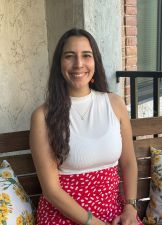
Kirsten Alfaro serves as the Early Childhood Integration Consultant within Families and Communities Rising for the NC Integrated Care for Kids (NC InCK) Model. Kirsten holds a Bachelor’s Degree in Psychology and Linguistics with a Minor in Chicano-Latino Studies from the University of Minnesota. She has served as a Bilingual Family Advocate with Durham Children’s Initiative, a Youth Director with the YMCA, and a Sr. Outreach Coordinator—advocating for farmworkers’ access to healthcare.